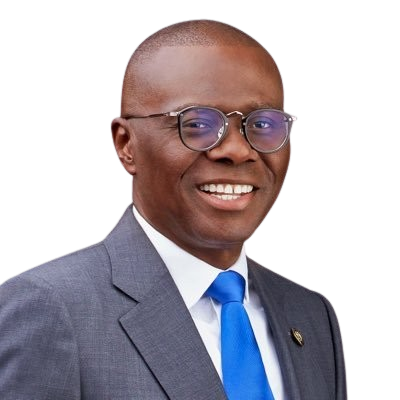
As Governor of Nigeria’s most populous state, home to Africa’s largest city, I carry the responsibility for maximizing the potential of our human capital, especially that of our young people.
That potential is great. We are a youthful country, with more than 40% below the age of 15. Already the largest in Africa, a young and growing population offers us the chance to build on Lagos State’s role as the economic hub of Nigeria, and Nigeria’s as the economic hub for the entire continent.
But historically, educational outcomes in Nigeria have been very poor. The World Bank estimates that currently some 70% of ten-year-olds across the country are in so-called “learning poverty” – meaning they are unable to read even a simple sentence with comprehension.
Ensuring that Lagos can harness its growing population to drive prosperity, growth and security not only within the state but within the country requires an education system that delivers learning.
I have made education a priority. Our “Leave No Child Behind Policy” has been the driver behind an enrollment policy designed to make sure all children in Lagos State go to school. We are succeeding – the vast majority do now attend – but investing in enrollment is not enough.
It is vital to ensure that children are not just attending school. They must learn to their best abilities. That requires a commitment to focus remorselessly on driving up learning outcomes.
Here in Lagos State we have made exactly such a commitment. In 2019, with support from our technical partners NewGlobe, we launched EKOEXCEL, a program designed to transform the learning outcomes of all pupils across all our public primary schools.
We began with our teachers. The quality of our education cannot exceed the quality of our educators, and we recognize that the best possible support for our teachers is vital. More than 14,000 teachers have been trained and upskilled in proven teaching techniques. Each one is supported to teach world class-quality lessons, with the same curriculum and same lesson notes based upon cutting-edge pedagogy delivered through their own personal teacher tablet.
That also provides real-time monitoring from every classroom in every school. EKOEXCEL leaders are able to track not only student performance, but a whole range of other crucial indicators, including teacher attendance, student attendance and lesson completion.
Access to such comprehensive learning data may be commonplace in the Global North, but in Africa it is revolutionary. UNESCO estimates that there is no learning data at all for two-thirds of African children.
With strong support from teachers, school leaders and teaching unions, we have expanded EKOEXCEL to cover every public primary school in Lagos State – more than 1,000 schools, reaching more than 350,000 students.
Results have been excellent. Endline tests found that after two years, despite the impact of the COVID-19 pandemic, an average Primary 3 EKOEXCEL student could read at nearly the same fluency level as an average Primary 5 pupil from before the launch of the program.
The learning gains we have seen in EKOEXCEL echo the findings from a study of the methodology which underpins our program, one led by the Nobel Prize winning economist Professor Michael Kremer. That study found learning gains ‘among the largest ever measured in international education’ when it tracked learning outcomes in schools in Kenya.
Early monitoring also found the program was delivering gender equity gains, with girls registered at EKOEXCEL schools 8% more likely to attend than girls at other schools.
The entire program is geared towards gender equity. All artwork and creative stories in text-books and work-books are commissioned to ensure equal visibility of male and female characters, and specifically represent female characters in powerful, unconventional roles.
Teachers are trained to call on both boys and girls in the classroom. As fewer girls than boys usually tend to volunteer in class, teachers are trained to practise more cold calling to ensure equal participation.
We are proud of our achievements, and proud that in 2022 EKOEXCEL was awarded the Titans of Tech Award for Best Innovative Digital Learning Platform, thanks to its evidence-based impact.
The UN Secretary General Antonio Guterres was frank when he spoke to fellow delegates at the Transforming Education Summit in September.
He told them that education systems were not making the grade and failing students and societies. Transformation was required. Countries were asked to sign up to a global Commitment to Learning; which Nigeria did. It is one of the few countries globally delivering on that commitment.
In Nigeria, the number of children aged 14 and under has been doubling every 20 years. Across sub-Saharan Africa, this youth population already stands at 525 million. Within 15 years, it will be 650 million. If African education systems cannot be transformed, the future for this growing cohort is bleak.
Here in Lagos State we have found that system transformation is achievable, that no-one should accept learning outcomes cannot be changed, at speed and at scale.
I believe our model, born of the Global South and driven by an African leadership, offers an example of how others can and must take the lead in overhauling their own education systems. With the demographic challenge facing Nigeria and Africa, this has never been more vital.