Teach for America (TFA) has paved the way for quality education in the United States. Currently, TFA teachers are impacting more then 750,000 students in 2,600 schools.
The woman behind the vision: Wendy Kopp.
The idea for TFA was first proposed in Kopp’s undergraduate thesis for Princeton in 1989. TFA aims to “enlist, develop, and mobilize as many as possible of our nations’ most promising future leaders to grow and strengthen the movement for educational equity and excellence.” This is accomplished through placing fresh college graduates in schools in low-income communities around the United States.
Through a collaboration with TFA, Kopp and a partner founded Teach for All. The model from TFA has been adopted in 37 countries around the world, ranging from France to Qatar. Kopp said that the reason the model has been adapted to so many countries, without facing cultural or economical difficulties, is because at Teach for All they “support local social entrepreneurs who have a vision for adapting the model into their context. We prescribe nothing, we don’t say you have to X, Y, and Z. There is a set of unifying principles that captures the spirit of the model.” These principles include recruiting as many graduates as possible to invest in the development of education in the country, and then the individual countries evaluate how to select, recruit and train their teachers.

After this is established, Teach for All gains access to the experience of other partners across the world and support the new programs in finding the best possible tools for their context. Teach for All also does this by connecting teachers from different organizations and organizing conferences about techniques that are efficient and successful in different social and economic contexts.
The model of Teach for America puts more emphasis on quality education instead of educating as many students as possible. Kopp said this was because “all kids should have the opportunity to fulfill their true potential, and what we’ve seen is that getting kids into classrooms doesn’t correlate to the fulfillment of their true potential.”
Kopp attributes success in education to providing marginalized and vulnerable kids with extra support to meet their needs. Essentially, getting students into classrooms is not enough to make them want to learn, or to succeed.
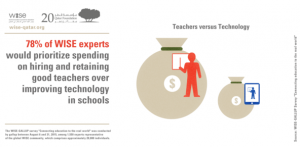
Kopp has been paving the way for quality education over the last twenty years. While quality education is her focus, she also said that she is working with different groups in the United States to revolutionize how quality education is assessed.
This article is written by the WISE Learners. Find out more about the WISE Learners’ Voice Program.