Home » Education Disrupted, Education Reimagined Part III
For an unprecedented 6 months, global physical lockdown has made disruption an ongoing reality for a majority of the world’s education systems. As students, teachers, and school leaders usher in a new academic year, many are wondering what school and learning will look like in a post-COVID-19 world in which uncertainty is the ‘new normal’. Time and again, research has shown that school leadership is a key factor in student outcomes and well-being. But at a time when the structures and systems of the traditional school model have been completely unraveled, has good leadership become ever more critical?
Even prior to the COVID-19 pandemic, conversation among education policymakers and experts had turned toward building a 21st century learning paradigm, a model that marries the acquisition of academic skill with the building of behavioral competencies such as agency, collaboration, problem-solving, creativity and life-long learning. The outcome of this approach – the so called 21st century learner – would be a resilient, agile, and collaborative problem solver capable of taking on the challenges of our ever-changing world. If COVID-19 has taught us anything, it is that the time to implement such a future-forward approach is now. But if we are serious about accelerating such transformation of our learning systems, isn’t it also necessary to consider the implications for our educators and school leaders?
For the third part in the WISE Education Disrupted, Education Reimagined convening series, in partnership with Salzburg Global Seminar, WISE has brought together key stakeholders from education systems around the world in a networked learning community to examine the implications of the COVID-19 crisis on the 21st century school leadership paradigm. Speakers and participants have engaged in discussions aimed at reimagining the mechanisms and approaches to responding to a fast-changing, uncertain world with resilient school systems and future-prepared school leaders. They also looked at, more practically, what type of leadership approaches have and haven’t worked during these 6 months of crisis and considered what leadership characteristics are required of 21st century school leaders and educators.
Part III was a public online convening bringing together experts and practitioners from around the world to consider the following key themes and questions:
Stavros Yiannouka, CEO, WISE, Qatar
Simon Breakspear, Research Fellow, Gonski Institute, UNSW, Australia
Anthony Mackay, CEO, National Center on Education and the Economy, Australia
Speaker: John Hattie, Director, Melbourne Education Research Institute, University of Melbourne, Australia
Moderator:Â Asmaa Al-Fadala, Director of Research & Content Development, WISE, Qatar
Speakers:Â Valerie Hannon, Board Director & Co-founder, Innovation Unit (UK)
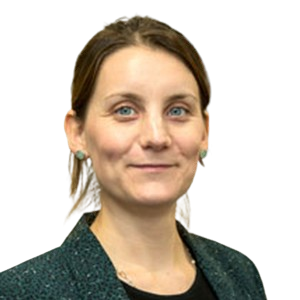
Staneala Beckley, Ministry of Education, Sierra Leone
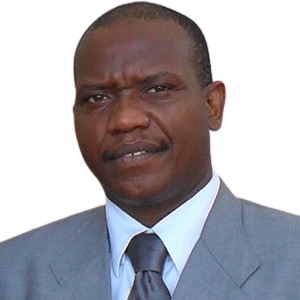
Maina Gioko, Head of Professional Learning Programme, Aga Khan Academy Mombasa, Kenya
Moderator: Charlotte Jones, Global Head of R&D, Education Development Trust, United Kingdom
Speakers: Amy Bellinger, Education Commission, United Kingdom
Kiran Bir Sethi, Founder, Design for Change, India
Valerie Yip, Senior Lecturer, University of Hong Kong, Hong Kong
Moderator:Â Dominic Regester, Program Director, Salzburg Global Seminar, Austria
Speakers:Â Xueqin Jiang, Education Consultant, China
Pasi Sahlberg, Professor, Education Policy, Gonski Institute, UNSW Sydney, Australia
Sara Ruto, CEO, PAL Network, Kenya
Karen Edge, Reader in Educational Leadership, UCL, United Kingdom
Moderator:Â Anthony Mackay, CEO, National Center on Education and the Economy, Australia
Dominic Regester, Program Director, Salzburg Global Seminar, Austria
Asmaa Al-Fadala, Director of Research & Content Development, WISE, Qatar
Speaker:Â David Sengeh, Minister of Education, Sierra Leone
Moderator:Â Asmaa Al-Fadala, Director of Research & Content Development, WISE, Qatar
Speakers: Jennifer Groff, Research Fellow, Qatar Foundation, United States of America
Hessa Al-Thani, Assistant Professor, Educational Sciences, Qatar University, Qatar
Noam Gerstein, Co-founder & CEO, Bina, Germany
Moderator:Â Dominic Regester, Program Director, Salzburg Global Seminar, Austria
Speakers: Mohammed Elmeski, Clinical Associate Professor, Arizona State University, United States of America
Carol Campbell, Associate Professor, Leadership and Educational Change, University of Toronto, Canada
Chantal Kabanda Dusabe, Education Advisor, School Leadership, VVOB Rwanda, Rwanda
Moderator:Â Shelby Cosner, Professor, Educational Organization and Leadership, University of Illinois, Chicago (UIC), United States of America
Speakers:Â Wendy Kopp, CEO & Co-founder, Teach for All, United States of America
Santiago Rincón-Gallardo, Education Consultant, Mexico/Canada
Vicky Colbert, Founder and Director, Fundación Escuela Nueva, Colombia
Moderator:Â Azad Oommen, Co-Founder, Global School Leaders, United States of America
Asmaa Al-Fadala, Director of Research & Content Development, WISE, Qatar
Dominic Regester, Program Director, Salzburg Global Seminar, Austria
For the third part in the WISE Education Disrupted, Education Reimagined convening series, in partnership with Salzburg Global Seminar, WISE has brought together key stakeholders from education systems around the world in a networked learning community to examine the implications of the COVID-19 crisis on the 21st century school leadership paradigm. Speakers and participants have engaged in discussions aimed at reimagining the mechanisms and approaches to responding to a fast-changing, uncertain world with resilient school systems and future-prepared school leaders. They also looked at, more practically, what type of leadership approaches have and haven’t worked during these 6 months of crisis and considered what leadership characteristics are required of 21st century school leaders and educators.