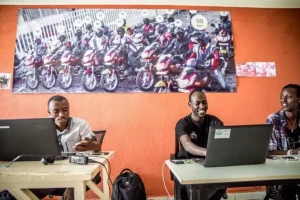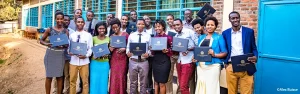
Sadiki is a recent college graduate, an intern at a tech startup, and one of over 21 million refugees currently displaced worldwide. Recently he gave a tour of the refugee camp that has been his home for the last twenty years and reflected on his educational journey. As the group passed a large, shady tree Sadiki was reminded of his first days as a student. Back then the camp had no formal primary school, and camp residents organized classes for children using a worn blackboard tied to one of the tree branches. Sadiki and his classmates could have never imagined that, so close to where they had once practiced drawing numbers in the dirt, they would one day be completing online assignments at a university campus.
Around the time Sadiki was finishing his secondary education in 2013, Kepler, an innovative university program, launched its flagship campus in Kigali, Rwanda. In partnership with Southern New Hampshire University, Kepler began offering a blended learning model that brings students American-accredited degrees through a combination of online learning, in-person instruction and robust career support.
Kepler was soon approached by UNHCR Rwanda to recruit students from the local refugee camps, and a new partnership was born. The high number of applications pointed to a clear need and desire for higher education opportunities among refugee students. However, Kepler also realized that the majority of refugee applicants would need specialized academic supports to be successful in the rigorous program. In response, Kepler, with the support of the IKEA Foundation and Southern New Hampshire University, launched a pilot campus in Kiziba refugee camp in the fall of 2015.