Educators face daily challenges to foster Arabic readers in this bilingual, digital world, as discussed in the previous article in this series, “Modern World’s Characteristics and Impact on Arabic Literacy Education”. We need to understand the root problems crippling Arabic Literacy Education before attempting to overcome them.
Based on our workshops held in the Middle East, Canada and the USA, we documented on-the-ground challenges, which paralleled in similarities across different regions.
Teachers’ Challenges:
- Limited time is allocated for Arabic class, making it difficult to cover the mandatory curriculum in the tight time constraints. Accordingly, students may not master a key skill before teachers have to move to the next one.
- Individual weaknesses are difficult for teachers to identify. This difficulty is caused by time constraints or by gaps in the assessment process.
- Lack of curriculum-mapped, fun resources to better engage students’ attention and enable them to enjoyably practice skills until mastered.
Parents’ Challenges:
- Lack of language knowledge makes it difficult for parents to follow up with homework or be part of their kids’ Arabic learning experience.
- Time scarcity; parents’ busy schedule makes it hard to dedicate sufficient time to teach their kids Arabic.
Kids Challenges – Learners’ Perspective:
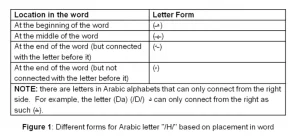
- Distinguishing the different forms of letters. For example, there are 4 different forms for the letter “Ha” (/H/) in Arabic – as shown in Figure 1 below.
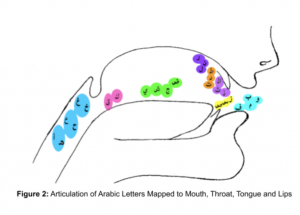
- Distinguishing between similar letters: letters can have the exact form but differentiated by dots (for example: ج ح خ). Letters can also have similar phonemic sound due to being close to each other when articulated. Figure 2 showcase why letters (س) (/S/) and (ص) (/SS/), for example, have similar pronunciation.
- Distinguishing between short and long vowels: there are 6 main vowels variations- 3 short sounds (/a/, /o/ and /e/) and three long ones (/aa/, /oo/ /ee/).
-
Hidden Challenges:
Our experiments revealed one extra hidden challenge. Apparently, when introducing one letter for students, it is usually presented with its three short vowel variations, for example (/ba/, /bo/,/be/) (بَ بُ بِ). We conducted an experiment to examine how kids would receive this first lesson. We changed the forms of Arabic letters and vowels while keeping the sounds. For example, we replaced the forms of the above example for (/ba/, /bo/,/be/) with these ones:
(
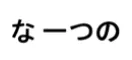
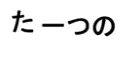
Hence, introducing multiple skills in one session— this challenge was revealed as it was frustrating to figure out where is the letter and where is what vowel. In other words, students need to learn multiple skills in one class: the form and sound of the letter coupled with different forms and sounds of vowels.
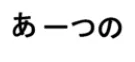
Moreover, to practice this newly introduced letter, it usually gets buried in a word that includes other letters that have never been introduced before. We extended the experiment to bury this newly introduced letter in a word that has other letters in them (e.g.
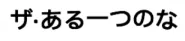
).
Hence, we identified the burying challenge as it was very frustrating to find the letter or make sense of the other scribbles beside it. After conducting this experiment on over 1000 teachers and parents, it was clearer why kids feel frustrated when learning Arabic in the traditional way.
Necessity is the mother of invention
Consequently, we need a better teaching model to accelerate students’ achievements. The current model is causing some students to fall behind as they reach middle school without Arabic literacy fluency. Other students memorize Arabic subject for grades. We need a model that cultivates for life-long, curious readers and learners.
In fact, the most significant inventions in the Arabic language is adding dots and vowels forms to letters to simplify reading Qura’an for non-native speakers. Moreover, Sibawayh, a foundational grammarian of Arabic, attempted to reorder the alphabets based on their phonetic characteristics.
The lack of ground-breaking innovation in modern Arabic literacy model has pushed us to start our research journey. The research’s mission is to enable children to learn reading and writing in a simple, accelerated and fun way to inspire them to fall in love with reading in Arabic. It is time to keep “learning to read” in elementary so upper elementary students can start “reading to learn;” we need to #innovate_reading.