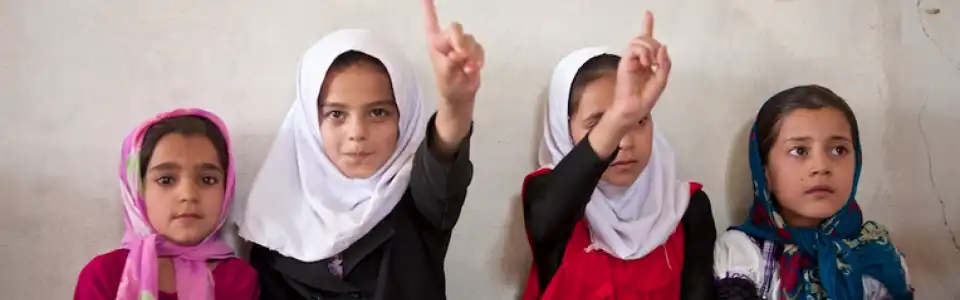
In 2012, the Afghan Institute of Learning (AIL), with funding from Georgetown University in the US, developed a curriculum that would incorporate the use of mobile phones and texting into AIL’s already proven literacy classes. The basic idea of AIL’s Mobile Literacy Program is to spend the first month teaching women and girls their ABC and how to recognize words visually and operate the mobile phone. After that period, the teachers text various questions to the students, ranging from “fill in the blank” questions to “correct this sentence” or open-ended questions. Students text the answers back to the teachers in addition to writing them down in notebooks. They are also free to use the phones for personal use. The ability to communicate with people outside their home is new to the women and girls, opening up a whole new world to them and encouraging them to learn to read more quickly so that they can communicate better with both their new friends in the class and family around the country.
Initially, AIL ran two pilot project classes. When developing the curriculum for this new course, it planned to teach students who were already able to read at a very basic level. Once students were enrolled and classes began, it became clear that the majority of students had exaggerated their ability to read and write in order to join the class. AIL teachers made the adjustments necessary and continued with the course. At the end of the two courses, 80 percent of students were able to read at fourth-grade level. AIL secured additional funding for 23 Mobile Literacy classes and has held 21 of these classes. Eighty percent of the students entering the classes have at most known their ABCs. Upon completion of the four-month course, 80 percent are able to read and write at fourth-grade level, a feat that would ordinarily take at least 18 months. To date, a total of 745 women and girls have participated in the Mobile Literacy courses.
Female students who have participated in the classes report huge changes in their lives as a result. They leave the class able to read newspapers and communicate with others through text messaging. They have a new group of friends and receive a huge boost in self-esteem. Some girls report having signed up for the class just to get a phone, but after learning to read they make the decision to continue their education in a more traditional school. Some of the older students are able to help family with businesses, or children with their homework.