
Imagine a future where AI tutors personalize learning for every student, where machines grade homework and provide instant feedback, freeing up teachers to focus on higher-level instruction. This future may be closer than you think. The recent 2024 GTC AI Conference showcased the incredible advancements in AI technology, offering a glimpse into the trajectory of this rapidly evolving field. NVIDIA, a leader in AI innovation, introduced the Blackwell platform, a groundbreaking development that enables organizations to build and run real-time generative AI on trillion-parameter large language models at up to 25 times less cost and energy consumption than its predecessor. To put this into perspective, imagine a library with a trillion books, and now picture a system that can read, understand, and generate new content based on all that information, while using a fraction of the resources previously required. This breakthrough opens the door for more widespread adoption of AI in various industries, including education. Moreover, NVIDIA announced announced Project GR00T, a general-purpose foundation model for humanoid robots. These advancements in robotics and embodied AI have the potential to revolutionize the way we interact with machines. Think of it as giving robots a “brain” that allows them to understand and navigate the world around them, much like how humans learn and adapt to their environment. In recent news, GPT-4o (short for “GPT-4 omni”) by OpenAI has taken the AI world by storm. This advanced language model accepts any combination of text, audio, image, and video as input and is able to respond in real-time. Imagine having a conversation with a computer that can not only understand and respond to your words but also analyze the images and videos you share, all while responding at a speed that rivals human conversation. Innovations in such technologies like GPT-4o’s are built on the bedrock of computational advancements like NVIDIA’s blackwell. With such technologies continuing to advance at an unprecedented pace, it’s clear that we are on the cusp of a transformative era in education. What will the trajectory for learning in schools be when this technology goes mainstream?
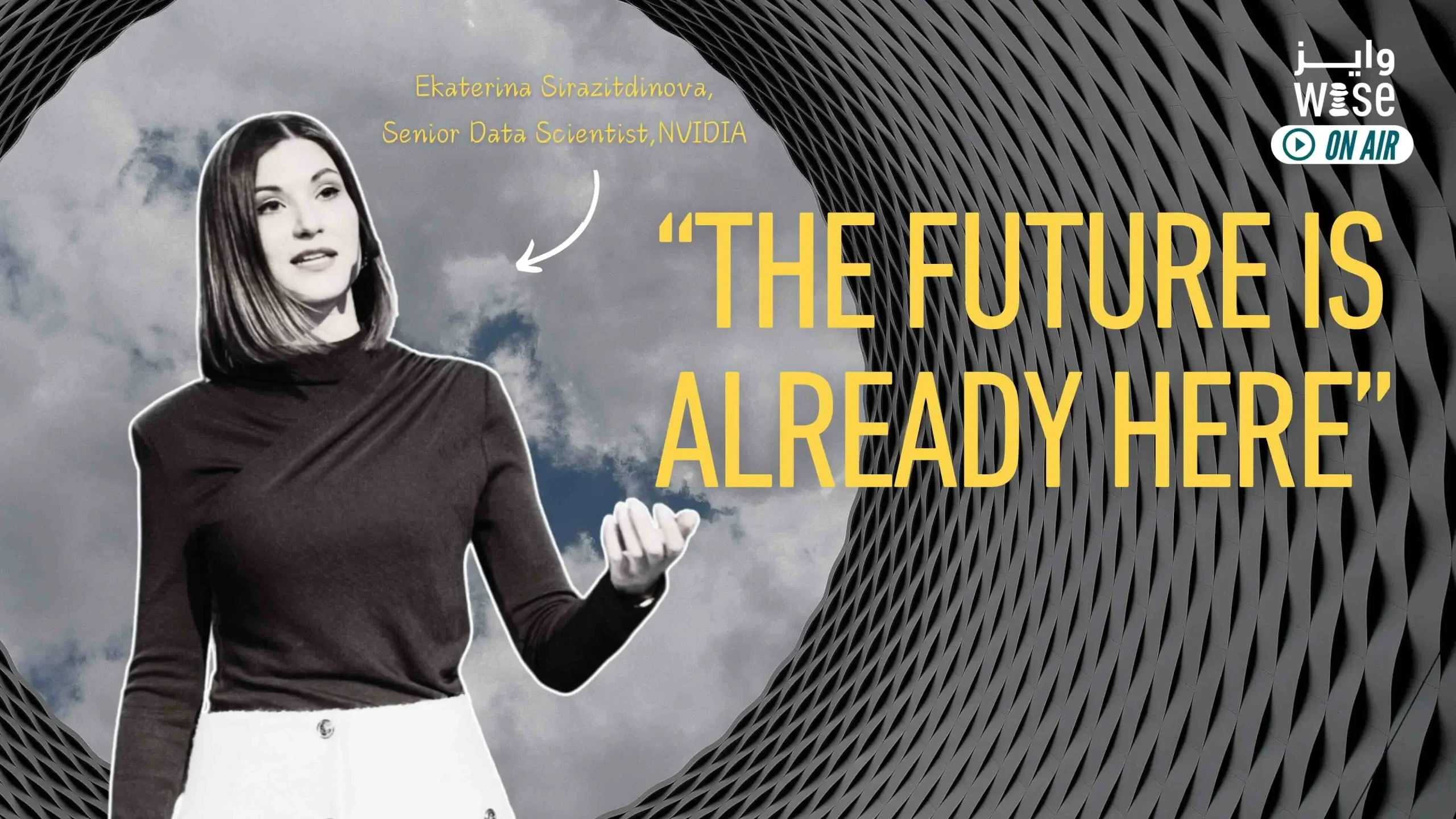
In this episode of WISE On Air, we delve into the heart of this revolution with Katja Sirazitdinova, Senior Deep Learning Data Scientist at NVIDIA.
As someone working at the forefront of this technology’s development, she has unique insights and expertise into the transformations we should come to expect.
Join WISE Director and Host of this episode Elyas Felfoul in conversation with Katja to get a glimpse of what those front and center are thinking when it comes to deep learning and AI.